
On Body Image
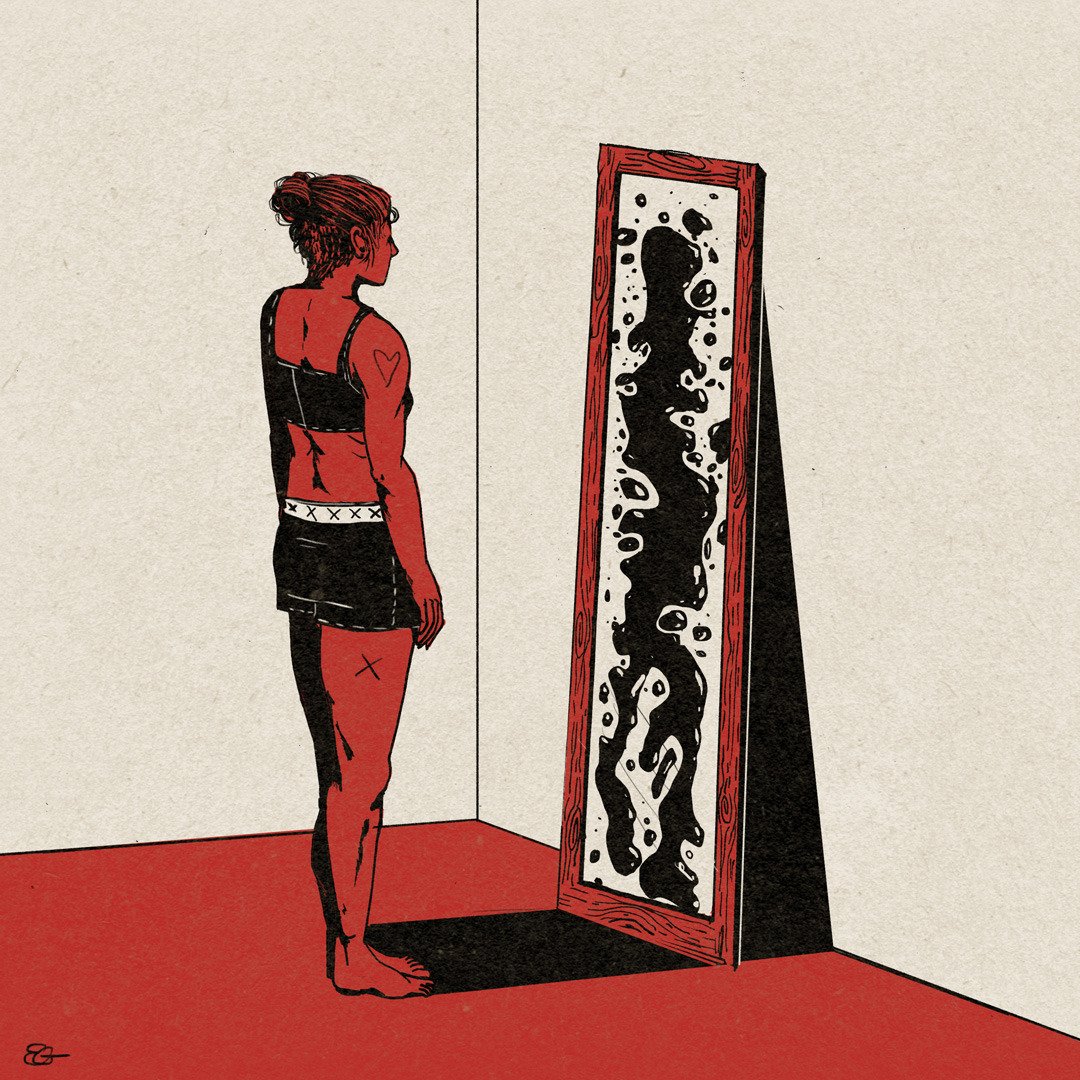
Have you ever…
•Felt ashamed of yourself or shamed by others based on your appearance (e.g. weight gain/loss, height, build)?
•Felt self-conscious that you dreaded or skipped an event (e.g. date, party, wedding, job interview, training)?
•Avoided getting your picture taken or hid behind others to shield you?
•Compared yourself to peers or friends who you believe are “more attractive” or in “better shape” than you?
•Tried extreme, unhealthy methods to change your appearance (e.g., restrictive diet, excessive training)?
If you said yes to any of these statements, you are not alone (and yes, I have done all of the above). Research reveals that almost 80% of women and girls avoid life events or activities because they believe they do not “look good enough” to be a part of it. This doesn’t just affect attendance at parties, but also involvement or advancement at school or at work, developing positive relationships, and pursuing important life goals.
Body image issues have a significant impact on our lives, for the worst it can stand in the way of our physical and mental health, and even our potential. While many sources claim that the solution to negative body image is to remind women and girls that “everyone is beautiful”, or that they are “beautiful no matter what”, these statements do very little to neutralize the problem as they still focus on beauty’s value over anything else that women and girls can offer (like their character, skills, and achievements). According to author and body image researcher Lindsay Kite, positive body image is “knowing your body is good regardless of how it looks.” In the same light, positive body appreciation doesn’t rely on appearances at all, but instead focuses on self-compassion. Self-compassion is based on seeing yourself with all your strengths and flaws while treating yourself with kindness and respect instead of tying your self-worth to your appearance. Studies also show that women with self-compassion and focused less on their looks were less likely to develop harmful habits (e.g., body shaming, disordered eating) and more likely to practice positive self-care routines (e.g., daily exercise, intuitive eating).
Women and girls deserve to live in a culture that reminds them they are always worthy and enough, no matter how they look. Even if overcoming body image issues is not an easy process, nor does it happen overnight, it is still worth doing. Change is possible, and it requires an accumulation of positive steps to notice significant difference. Here are some strategies that you can try:
-
Let’s start with the facts, and not the opinions. Challenging how we focus on our body’s appearance requires changing what to focus on. Take a moment to reflect on the different ways your body allows you to move or interact on a daily basis that has nothing to do with how it looks. For example, your body allows you to:
• Move with strength and coordination
• Smell, eat or cook delicious food
• Hold your loved ones (and pets)
• Observe and explore natural wonders
• Listen, dance, or sing along to your favorite songs
• Play instruments— or video games :)
What are other ways your body allows you to enjoy or function in life?
-
If females are more than just our looks, we need to deliberately celebrate everything else we can do. Take a moment to acknowledge your many talents and traits which can include but are not limited to:
• Your kindness and consideration towards others
• Your sense of humor
• Your work ethic and resilience
• Your intelligence
• Your creativity
• Your athleticism
• Your leadership, and ability to work well with others
• Your courage to face challenges or try new things
If this feels tough to answer, don’t give up. It helps to ask a trusted loved one to remind you of your strengths, or be inspired to pursue any skills or traits you’d like to develop in the future.
-
Body stories are the stories, criticisms, or judgments we tell ourselves, or the stories others have told us, about our bodies, identities and abilities. These stories shape how we see ourselves, whether or not they are factually true or serve us for the better. Thankfully we can change our body stories, it will take time, but raising our awareness on what we want to change is the start.
Find a body story that you want to change (e.g., “I’m too small /weak to lift weights“)
Reflect on when you first started believing this story and who, or what, fuels this story (e.g., being mocked by family about my height and size). Then ask yourself if this body story is factually true or unfounded (e.g., “Does my size truly limit me from getting strong? Or is it lack of training?”)
Rewrite the story into one you want it to be and focus how you want to feel or see yourself when your appearance is questioned or judged. Repeat or reflect on this every time the old body story comes up (e.g., “I may be small but I can be strong”)
Take concrete steps to influence your new body story (e.g., start strength training)
-
What we see influences how we feel. We may not have complete control over what we are exposed to, but we still have some agency on the amount that we consume. Reflect on any media you consume on a regular basis (e.g., social media accounts, apps, sites, blogs, books, movies, TV shows, podcasts) and ask if any of them make you:
• Feel hopeless and worthless in comparison?
• Tear others down in order to feel better?
• Fuel old/negative body stories?
If any of the following prompts trigger a “yes” about the media you consume, better to decrease your consumption of it or cut it out completely as it hinders improving the way you feel about and see your body, and can also affect the way you treat others based on their appearances or body image. Eliminating or reducing appearance-based media is also two-fold, as you now have more time for media that fuels your self-acceptance.
-
Our words are powerful, as they fuel our body stories. It takes time to shift the way we think and feel, and this can range between different gradations: from negative to less negative, from less negative to neutral, from neutral to slightly positive, from slightly positive to positive. Note that it’s not possible to shift all your thoughts from negative to positive. If you can at least get to a neutral stage, it’s still an improvement from always seeing yourself in a negative stage.
NEGATIVE: I hate my thick legs
SLIGHTLY NEGATIVE: I’m uncomfortable with the thickness of my legs
NEUTRAL: My legs are thick
SLIGHTLY POSITIVE: I have thick, strong legs
POSITIVE: I’m proud of my strong legs that carry me through my day and make me feel powerful when I train
-
People have a tendency to imitate the beliefs and behaviors of their social circles. If you want to change your body image for the better, you can do so while raising awareness and helping other women and girls improve theirs, so set the example.
• Compliment women and girls on their talents and traits instead of their appearances
• Avoid commenting/criticizing your own body and the bodies of others. Even if your comment is meant as a positive (e.g.,”You’re so skinny, I’m jealous!”), it still emphasizes the importance of appearance and may fuel that person’s body-image issues (e.g., Being celebrated for being skinny may trigger a person to continue unhealthy habits such as under-eating, to maintain their figure.)
• If body-shaming is initiated by someone else, it’s important to take a stand by not participating in it or addressing it:
• Speak up (e.g., “I’m not comfortable talking about her weight behind her back.”)
• Change the topic (e.g., “Actually I came here to discuss our upcoming project.”)
• Exit if they continue or you are ignored (e.g., “Since you guys want to keep talking about her body and I don’t, that’s my cue to leave.”)
• If a person body-shames themselves, it’s important to be empathetic while raising their awareness and promoting healthy self-image:
• Do not ignore or support her comment (e.g., “You’re right, cut back on the carbs if you want to wear that bikini.”) Although it may feel like you’re “fixing” their mindset, this approach still reinforces that her body or appearance is the problem.
• Make her feel heard without agreeing with the body-bashing (e.g., “It must be tough that you’re feeling pressured to lose so much weight right now, I’m sorry you feel this way.”)
• Raise awareness to her comment. Sometimes self-doubt and anger can be triggered by recent or culminating events (e.g., “That’s a harsh thing to say about yourself. Where is this coming from?”)
• Help shift perspective. If they are open to changing their self-image for the better, share tips 1-6 :)
“Leaving the world in better shape than how you found it, is more important than the shape of your body.”
R E N E E E N G E L N
-
Diedrichs, Phillippa & Jess Weiner. “The 2017 Dove Global Girls Beauty and Confidence Report.” Dove. 2017.
Engeln, Renee. “Beauty Sick: How the Cultural Obsession with Appearance Hurts Girls and Women.” Harper. 2017.
Galbraith, Molly. “Strong Women Lift Each Other Up.” Harper Horizon. 2021.
Kite, Lindsay & Lexie Kite. “More Than a Body: Your Body is an Instrument, Not an Ornament.” Harvest. 2020.